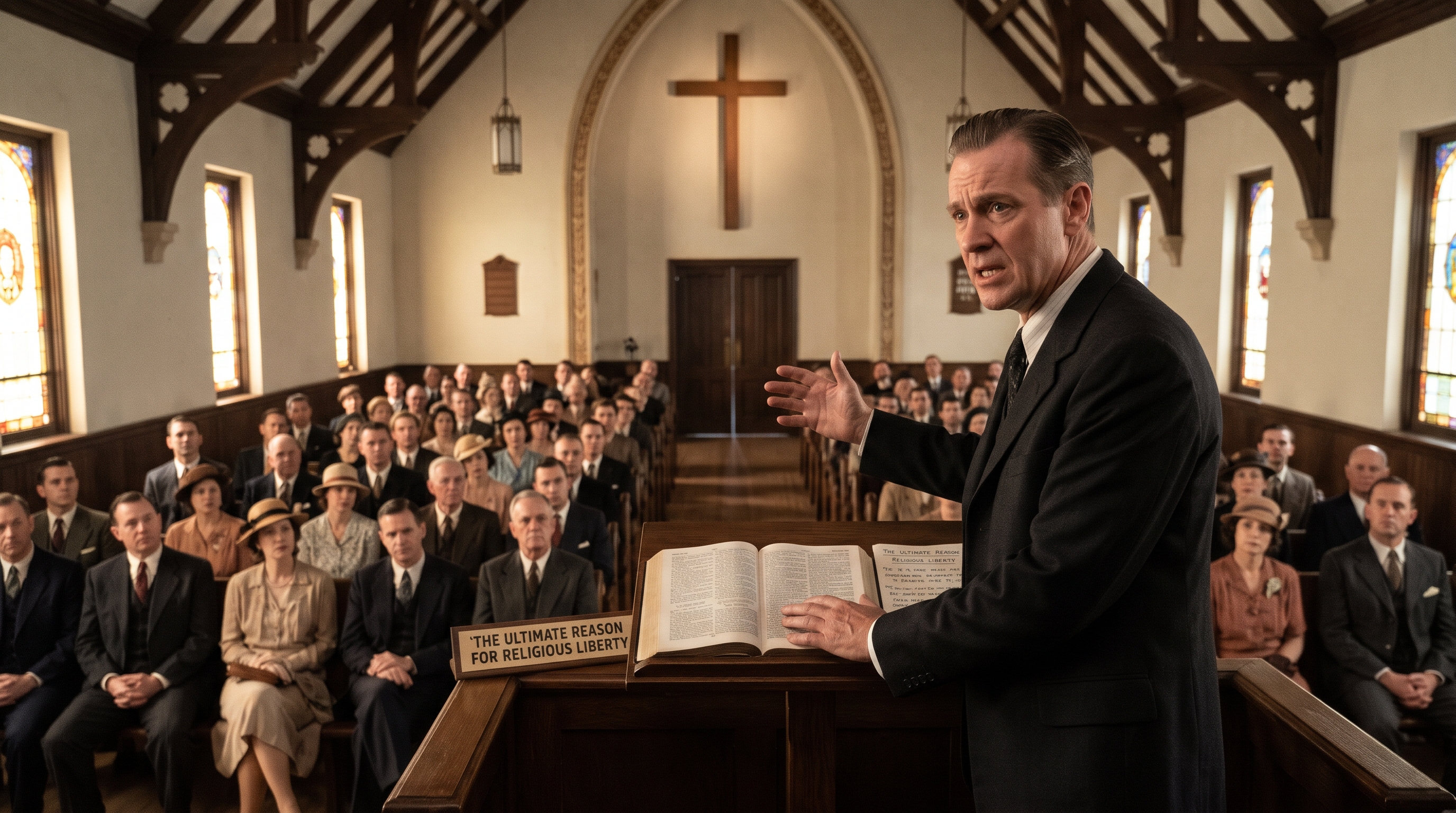
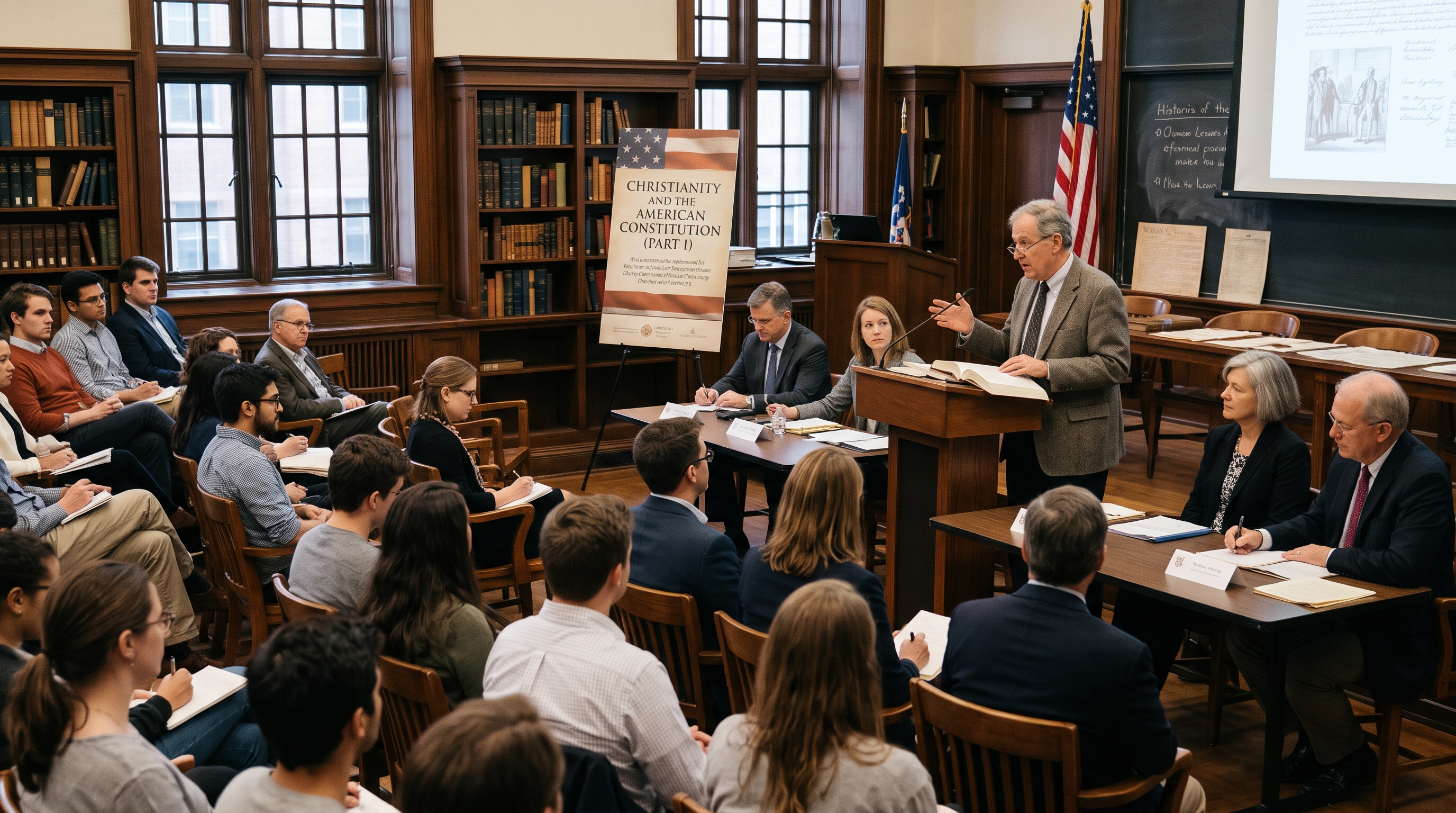
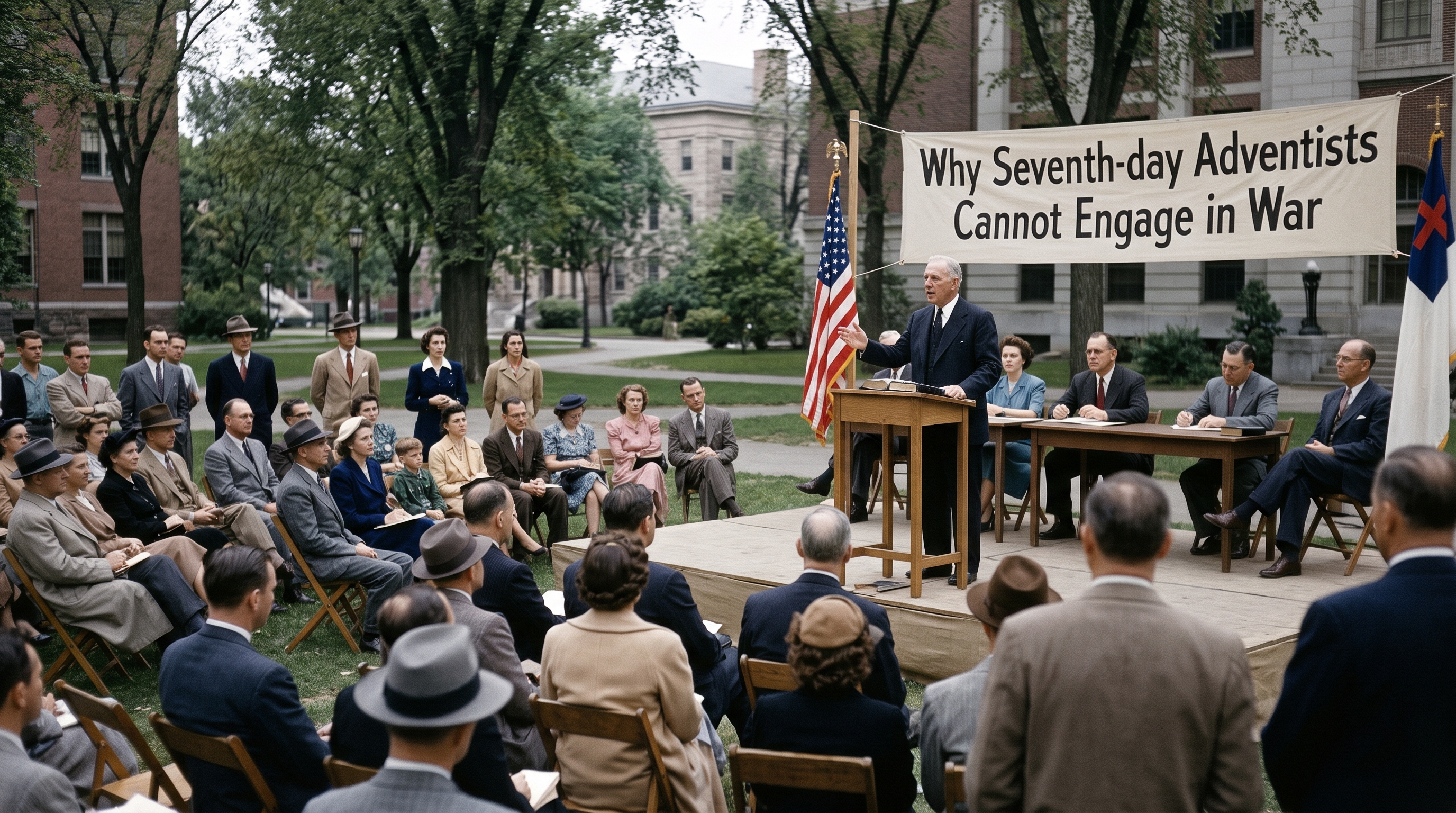
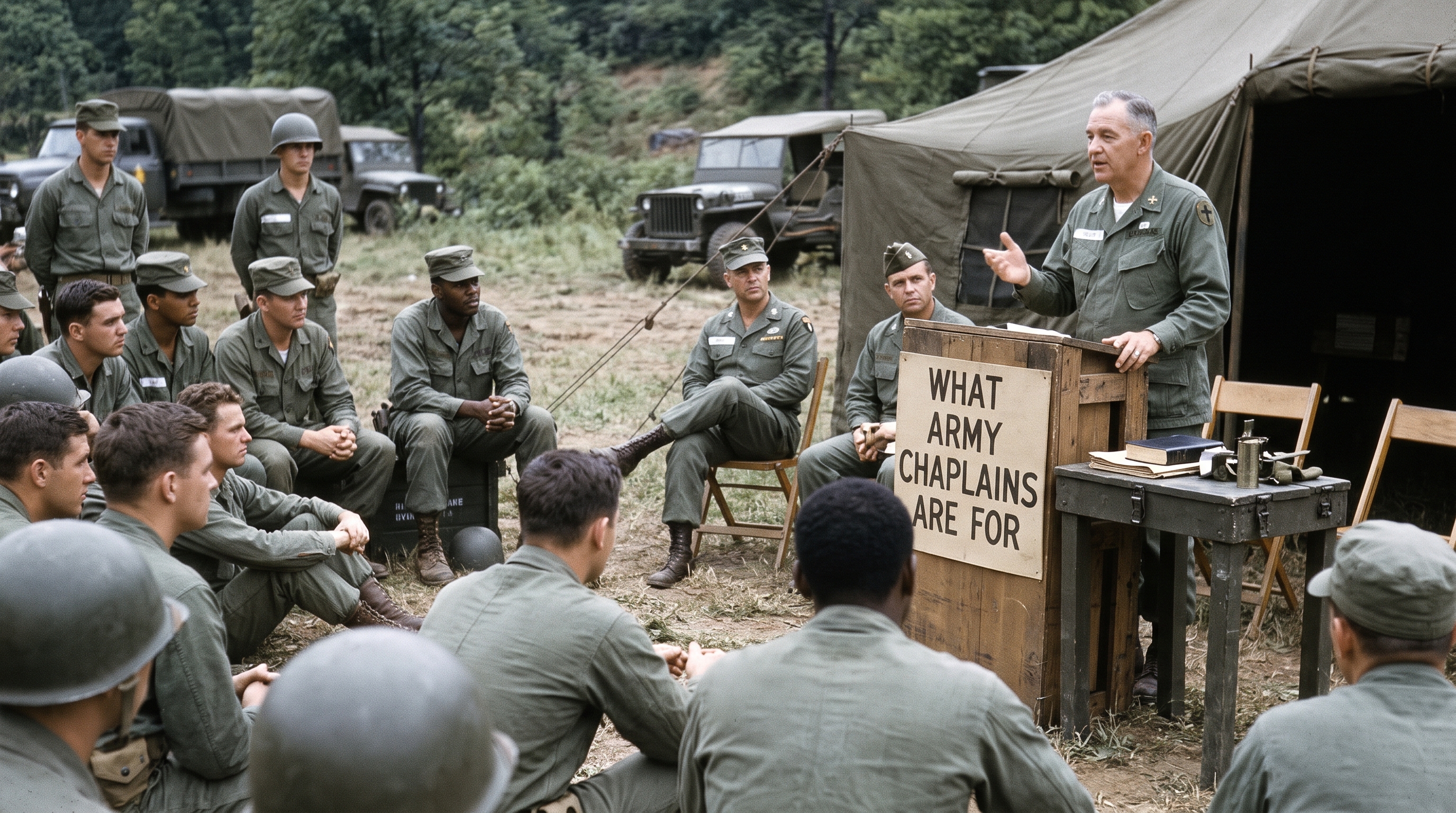
Religious liberty has too often been seen selfishly. George Fifield explains it well: The [false] idea of religious liberty is that it is wrong for you to enforce your religion upon me because your religion is false , but it is right for me to enforce my religion upon you because my religion is true .
Should Christians become army chaplains? AT Jones quoted a talk by an archbishop, who said "The chaplain invested the soldier’s fighting, the soldier’s whole round of labor and suffering, with the halo of moral duty." At Jones responded to this statement: "We have never believed in the utility of the office, but this statement makes it worse even than we had thought. We had never before conceived of the chaplain’s duty as being that of casting a halo about the business of killing people. Unquestionably the soldier’s business is one that will admit of a service of this kind. This is no natural halo about it, certainly. To deliberately shoot down men, made in the image of the Creator, to smash their skulls with clubbed muskets in fierce hand-to-hand conflict, to cut and stab them to death with sword and bayonet, to pour their life blood out upon the earth, to make widows and orphans of those they have left at home,—these are actions which, unsurrounded by any halo, would strike the minds of ordinary people with horror. Gen. William Tecumseh Sherman, who certainly knew what the soldier’s business is, said, “War is hell.” Putting this statement of this eminent military authority with that of Archbishop Ireland concerning the chaplain’s office, we are brought to the conclusion that the legitimate business of the army chaplain is to cast a halo about hell!" So no, we should not become army chaplains and do a job making what is wrong seem right.
I was looking into the eldest son of Donald Trump because I recently saw this headline: Trump’s eldest son emerges as key voice influencing cabinet picks – report . Trump Jr. was influential in bringing in J.D. Vance as Vice President, which originally looked odd because 8 years ago Vance spoke publicly against Trump. Vance had called Trump an idiot, compared him to Hitler, said he was unfit for office .
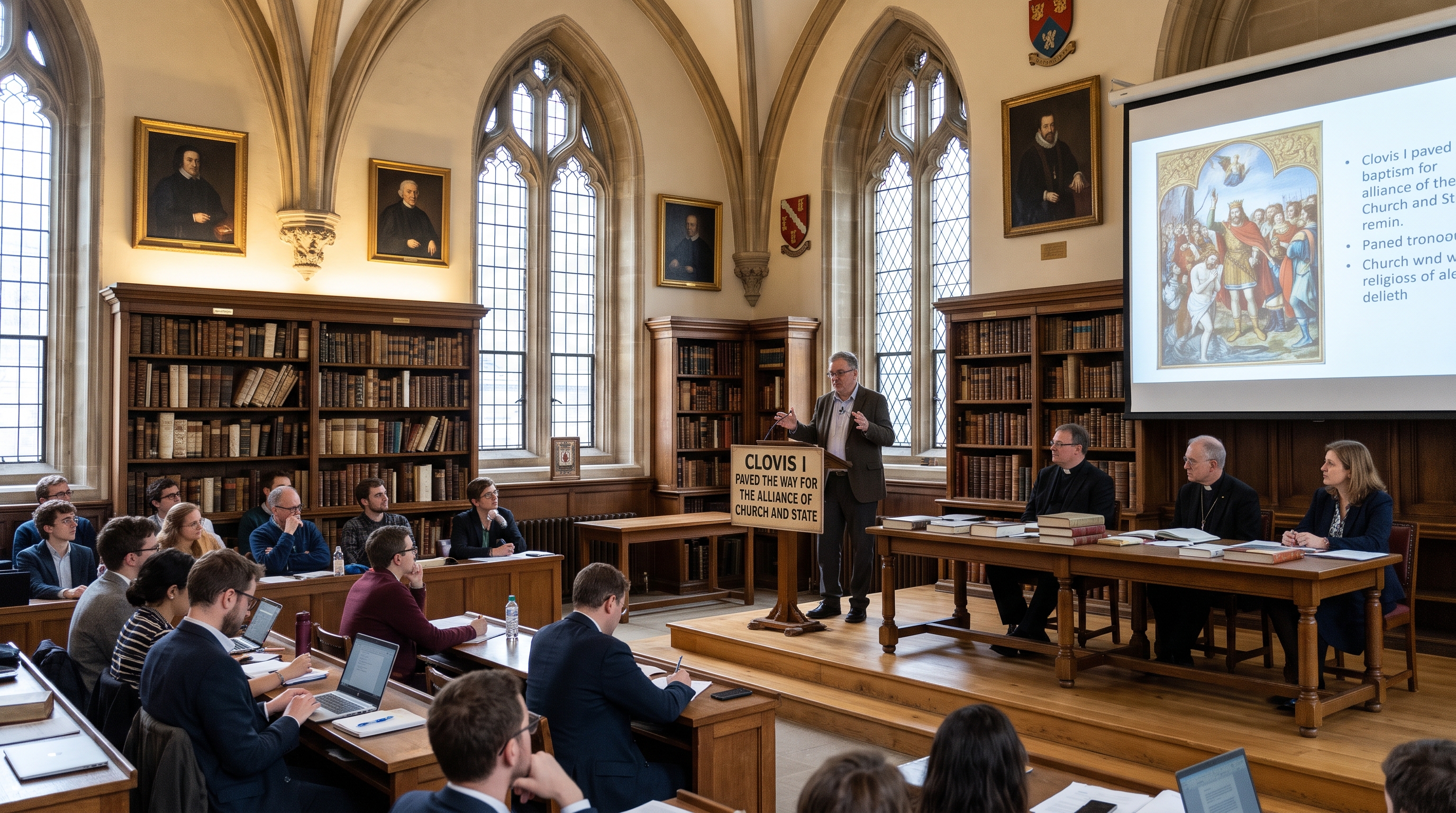
This is a great video of the rise of Clovis, "eldest son of the Catholic Church", and how he was key to the rise of the Papacy in the prophetic dates of 508 AD and 538 AD. It is fascinating how Clovis I converts when he needs victory in battle (Battle of Tolbiac, 496 AD), just like Constantine did at the Battle of the Milvian Bridge (312 AD) . I also learnd that "Louis" comes from "Clovis", and the reason French kings take the name Louis is following after Clovis.
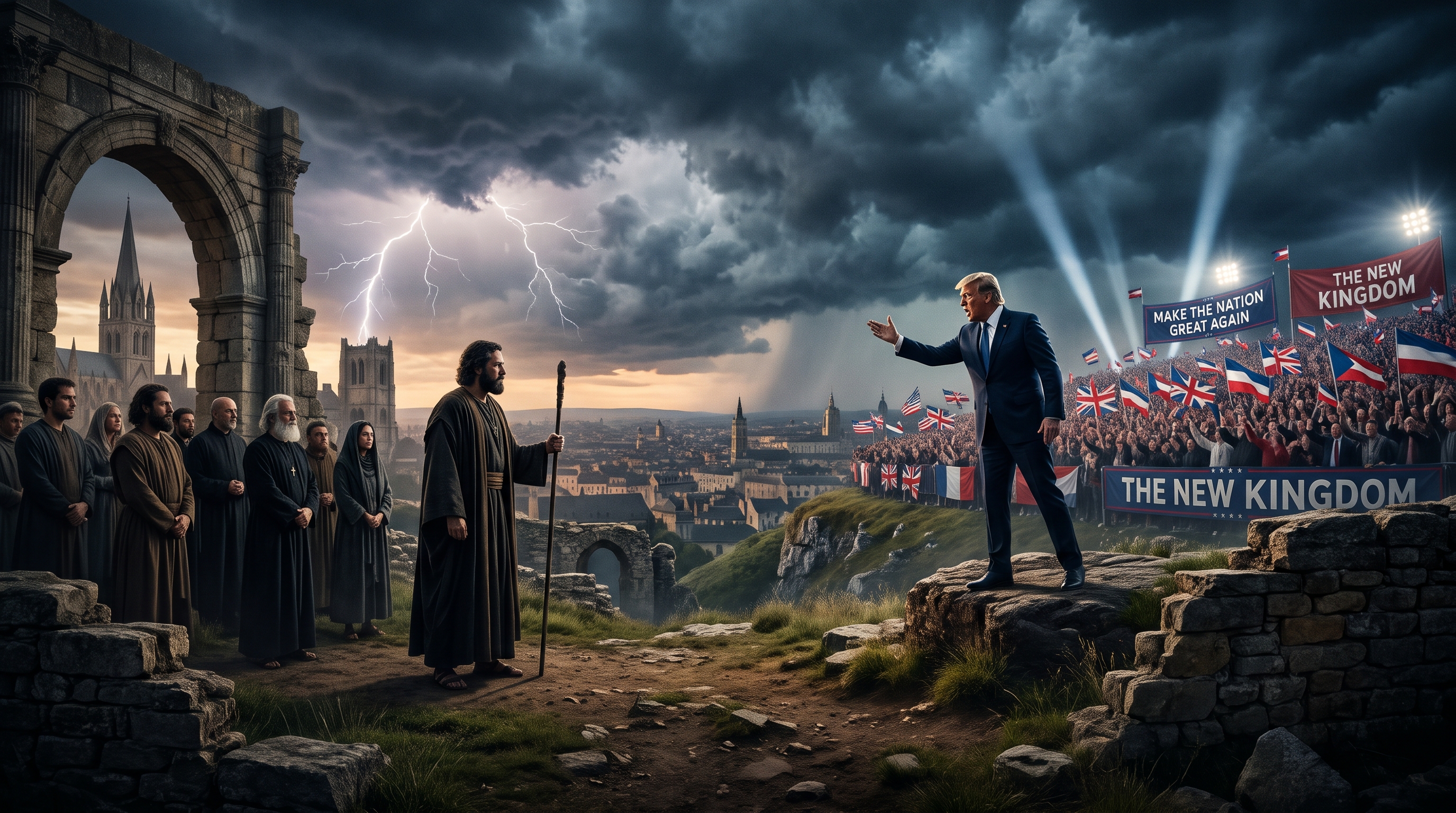
What kind of a saviour were the Jews looking for? One like Jehu, who assasinated evil king Ahab? One like Judas Maccabeus, who led the insurrection against the Greek Selucids? Did they see themselves as sinners? Or was the problem "out there" somewhere? The Jews didn’t care about being saved from their sins; they wanted to be saved from their political enemies. They wanted a manly king who wasn’t afraid of “the powers that be”; they wanted Jesus to take up His AK-47 and send the “godless liberals” to the proverbial guillotine. In their mind this is how Israel would be made great again.
"Imagine having to flee your home and family in the middle of the night in the dead of winter; gathering what little food you could carry and wearing whatever would keep you warmest in frigid temperatures and deep snow; uncertain of anything. That is what Roger Williams, the founder of the state of Rhode Island and Providence Plantations, endured in the very cold and snowy winter of 1636, to escape arrest and deportation back to England where he would be imprisoned and likely hung for his rebellious beliefs of religious freedom and the need for separation of church and state."
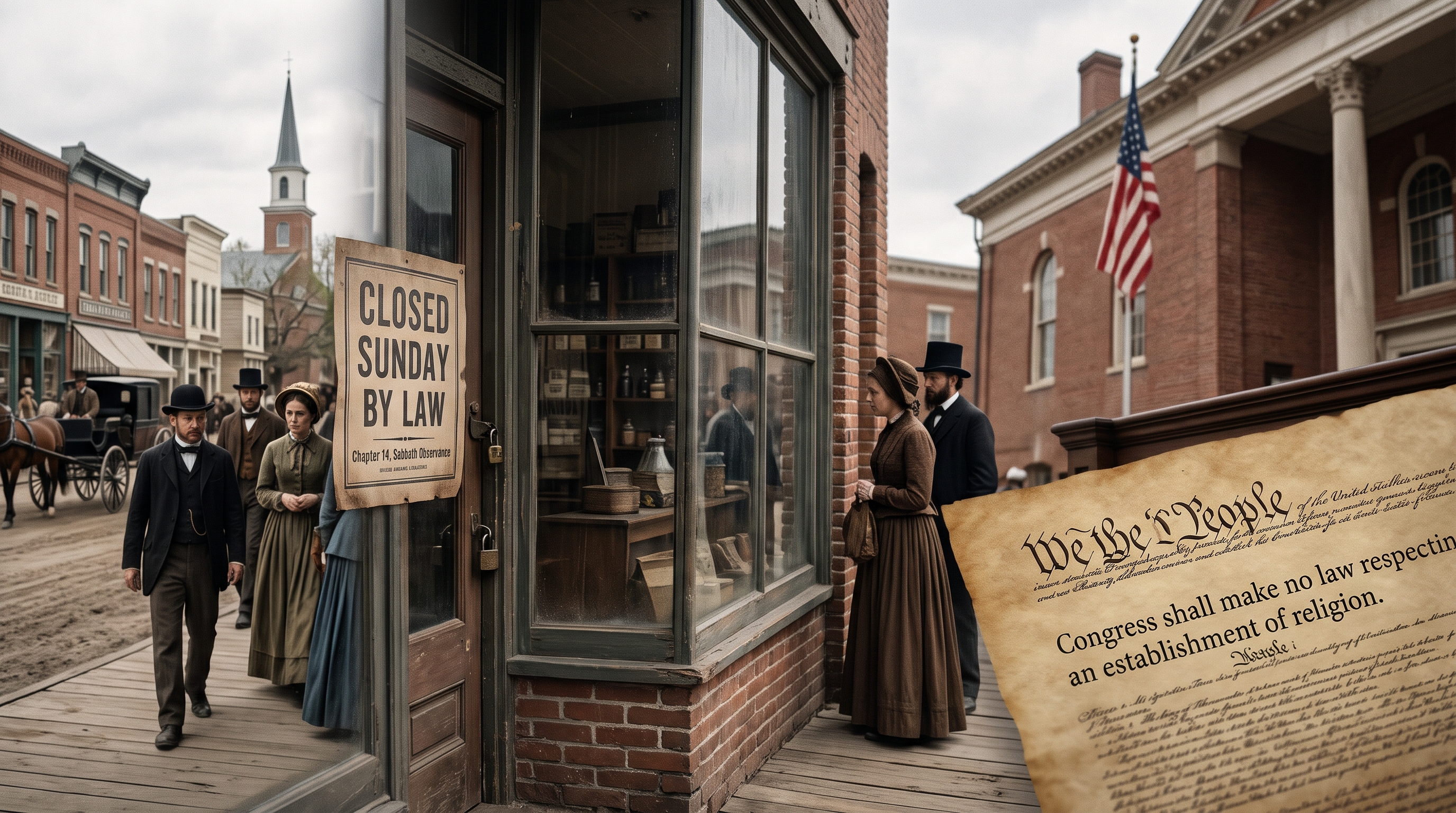
Many Christian nationalists today claim that the 1st amendment which prohibits Congress from making laws respecting an establishment of religion, or prohibiting the free exercise thereof is simply to protect the Church from the State restricting their liberties. It is true that it is meant to protect the Church from the State, but the founding fathers likewise meant to protect the State from the Church. They did not want any religion to be allowed to come in and use the State to enforce their sectarian dogmas or give them special treatment. If a religious organization did influence the State to make laws like this, then the State would be guilty of making laws respecting religion, violating the 1st amendment.
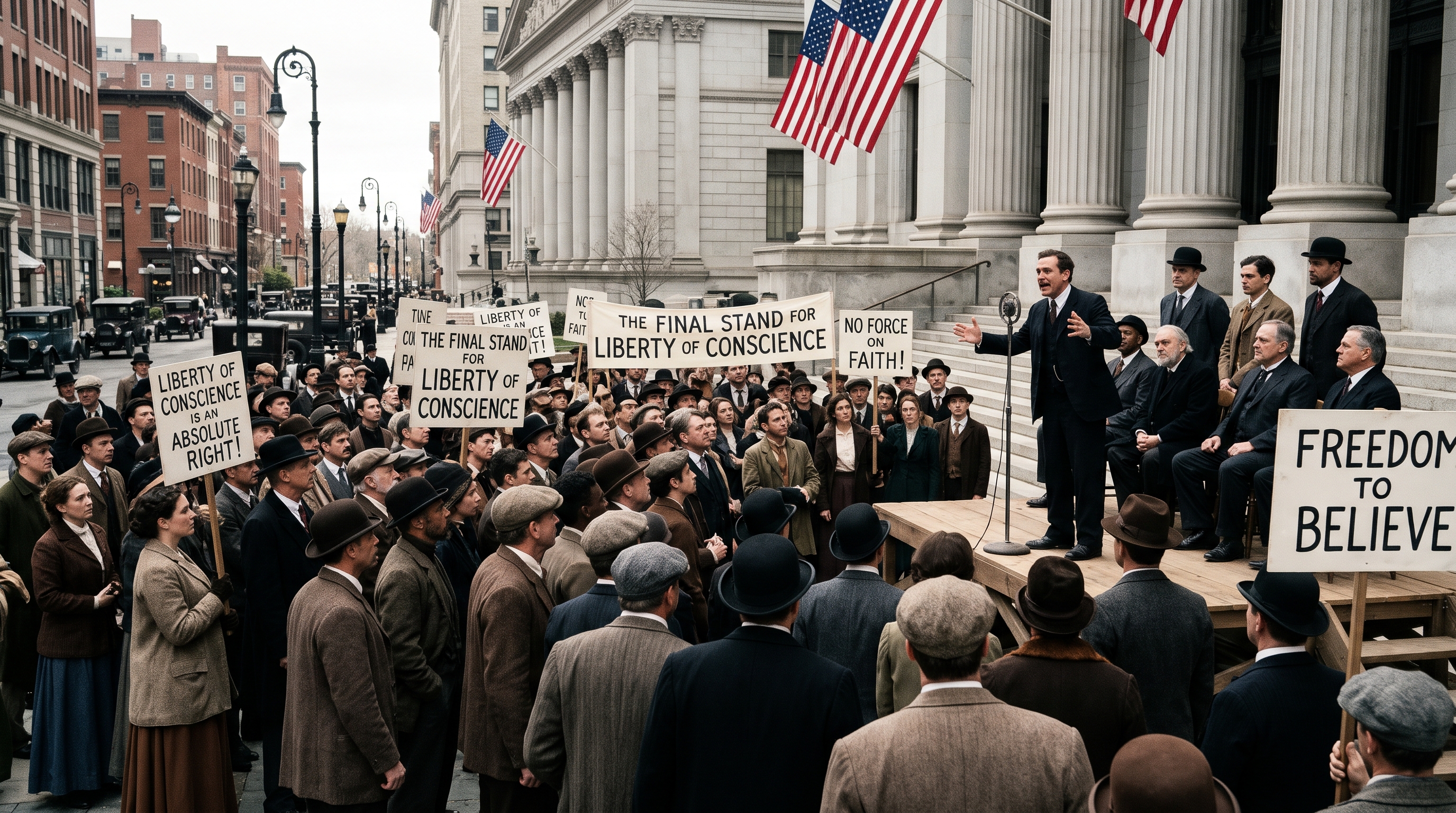
We are preparing for one last stand, the final defense of all that is good; the elucidation of the principles of protestantism and republicanism in their truest sense. Prophecy tells us that this defense will fail and that the majority will give up their God given rights and liberty to think for themselves as it relates to who and when they worship. Church and state will unite once more and a theocracy will result with so-called Christianity legislated as the state-based religion enforced by the laws of the land. It will come as a direct response to the decline of America and the western world in morality, economic stability, and a healthy ecology. The reasoning championed by its proponents will be eloquent and, to those unfamiliar with history and the character of God, their arguments will be seductive and convincing.
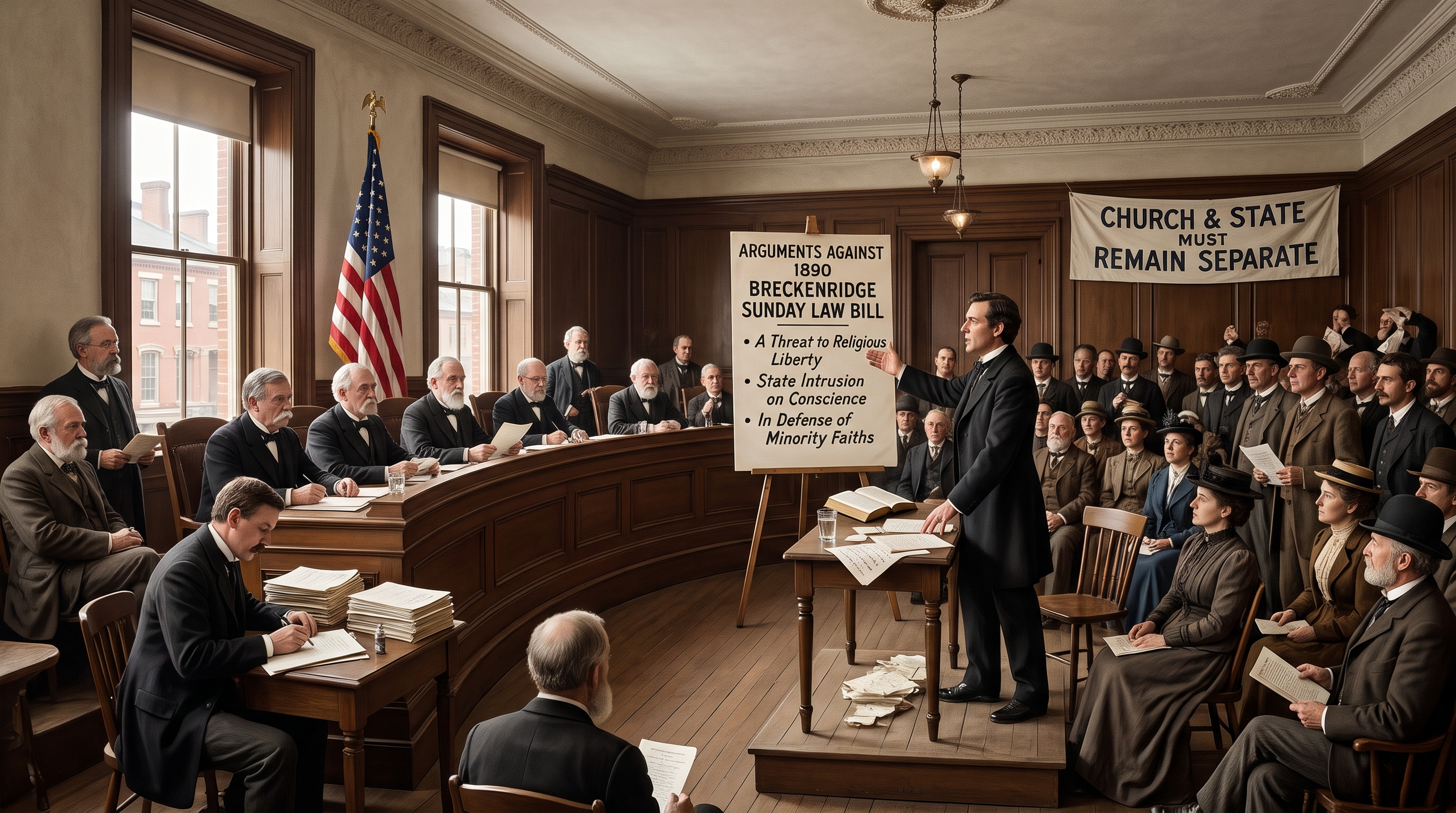
The arguments made against this 1890 Washington D.C. Sunday Law Bill by J.O. Corliss and A.T. Jones contain some fascinating insights that we should reflect on. Many of us think that we understand what the Sundaw Laws were and the arguments we as Saturday Sabbath keepers use against them. But do we really know as well as we should? Are we really prepared for how ingenious these laws are written and the depth of the arguments made in their favor? I think not. There are many things we can learn from just the basics of this 1890 case argument. But nothing can quite prepare you for the tour de force of A.T. Jones’s argument, which comes after Corliss’s argument like a Tsunami wave expanding dramatically all the earlier arguments. How he is able to bring the big picture to the matter while touching on issues of life and death, good and evil, is a marvel to behold.